Static Billboard vs Digital Billboard in Egypt: Choose by Activity, Audience and Campaign Goal
The biggest billboard is not automatically the best billboard. A location that makes sense for a property developer may be completely wrong for a restaurant, clinic, retail brand, or tourism business.
The right choice starts with the business: who you want to reach, what you want them to do, where they move, and how long the message needs to work.
Static or Digital Billboard: Which Is Better?
The short answer:
Static billboards are usually stronger for one stable message, long-term presence, and continuous visibility. Digital billboards are usually stronger for changing offers, multiple creatives, short campaigns, and messages that need to appear at specific times. The decision should follow the activity and campaign goal, not the technology alone.
Choose Your Section
- Start with your business activity
- What is a static billboard?
- What is a digital billboard?
- Static vs digital billboard comparison
- What audience data should you ask for?
- A real planning example from Alexandria
- How should you compare cost?
- How to choose a billboard location in Egypt
- How Yafta Map helps
- Frequently asked questions
Start with the Business, Not the Billboard
Before comparing screen types, decide what the advertisement needs to achieve. Is the goal to make a project familiar, bring people to a branch, promote a limited offer, generate calls, support a launch, or keep the brand visible in a specific area?
The same billboard can be excellent for one business and a poor investment for another. A restaurant needs proximity and timing. A property developer needs repeated exposure along the routes used by potential buyers. A retail brand may need screens close to shopping decisions. A hotel or tourism business may benefit more from airport, coastal, and destination placements.
Static can build familiarity over time. Digital can move through launch messages, viewing invitations, payment plans, and limited offers.
Nearby locations and useful timing matter more than a large but distant board. Digital can support lunch, dinner, weekends, and special offers.
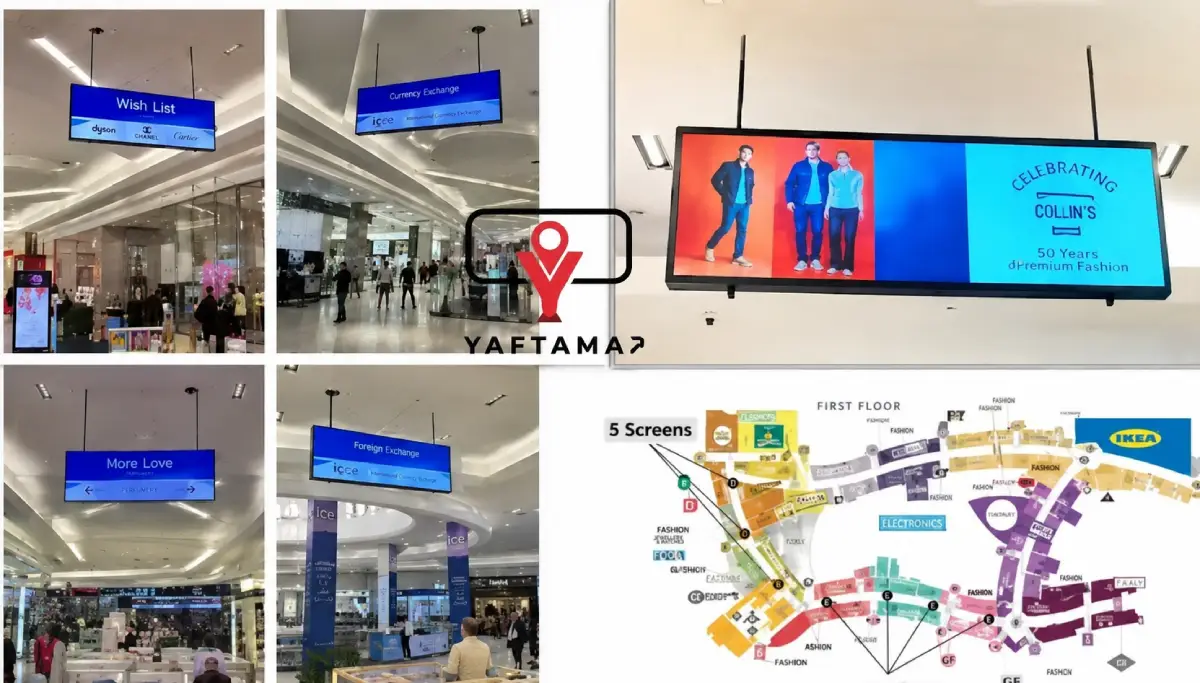
Mall and retail placements can reach people close to a purchase decision, while digital allows seasonal and promotional messages to change quickly.
Airport, hotel, coastal, and destination media may be more relevant than a general roadside placement far from the travel decision.
The practical rule:
Not every advertisement belongs in every location. The right placement is the one that connects the message, audience, timing, and desired action.
This is where a media plan becomes more useful than a list of available boards. Yafta Map’s experts can connect your activity with the audience, route, screen type, timing, message, and measurement approach instead of recommending a location simply because it is available.
What Is a Static Billboard?
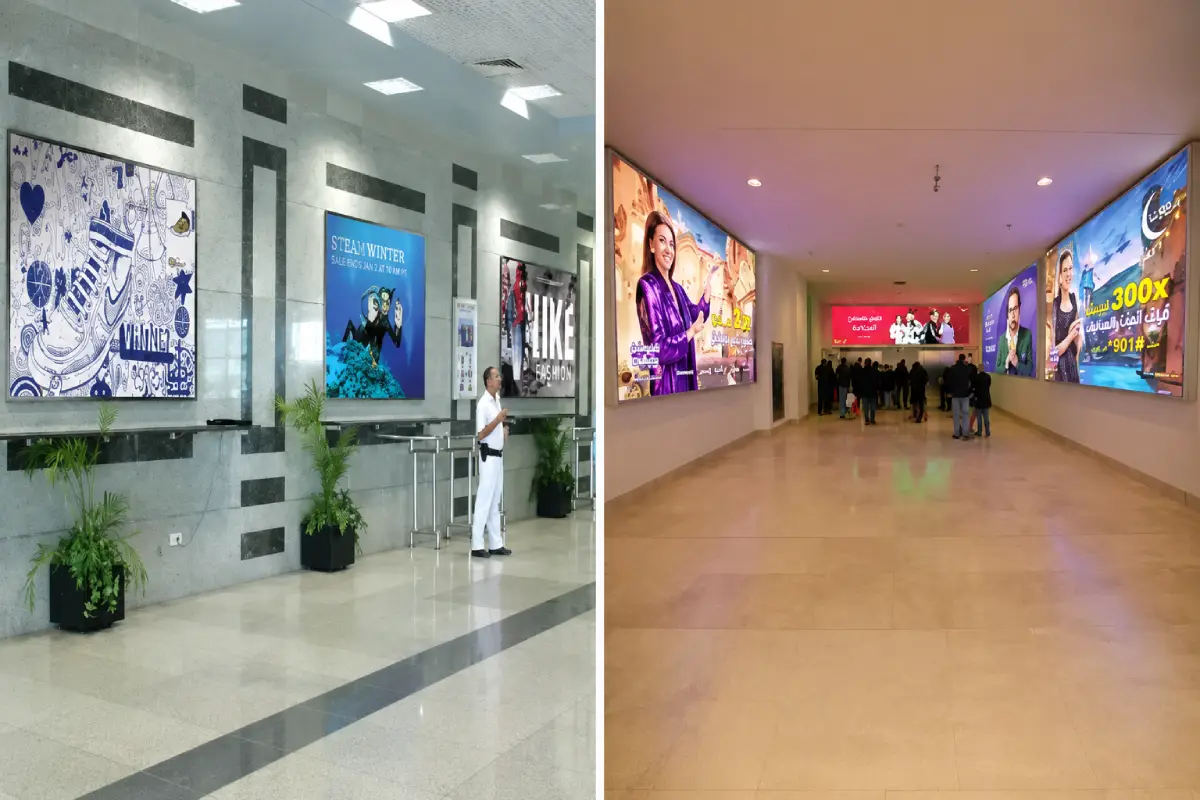
A static billboard is a printed advertising face installed in a fixed location for an agreed period. The same message remains visible until the campaign ends or the creative is physically replaced.
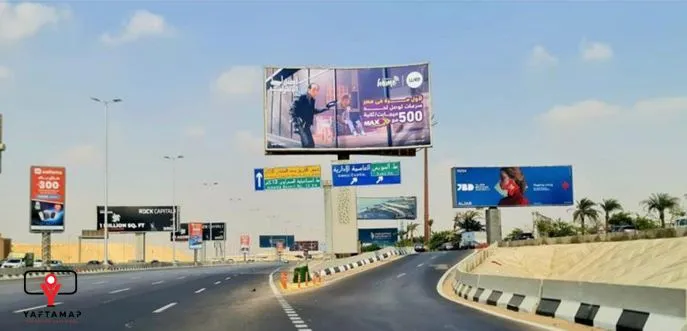
Its strongest advantage is not simply that it is traditional. It gives the advertiser a stable physical presence in one place without sharing the face with a rotating digital loop.
Static is usually a good fit when:
- The message will remain stable for several weeks or months.
- The advertiser needs continuous presence on one important route.
- The campaign is focused on awareness, trust, or location proximity.
- The audience is local and likely to pass the site repeatedly.
- The brand wants full ownership of one advertising face.
What Is a Digital Billboard?
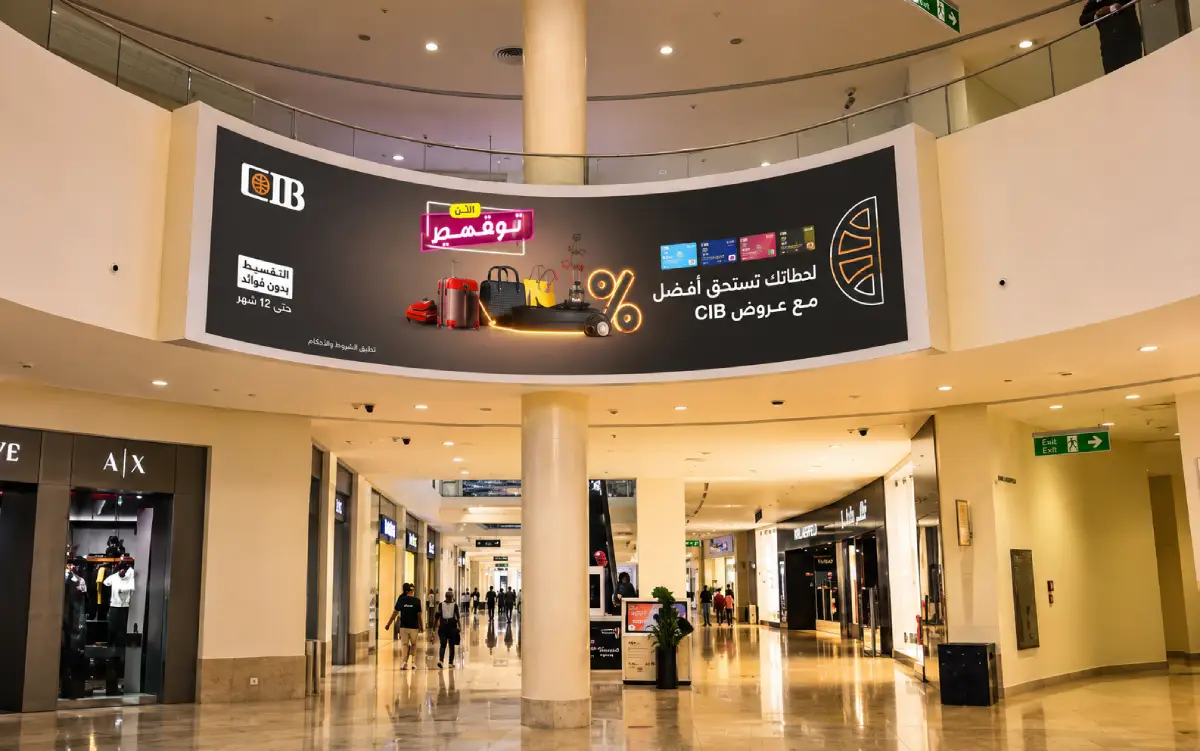
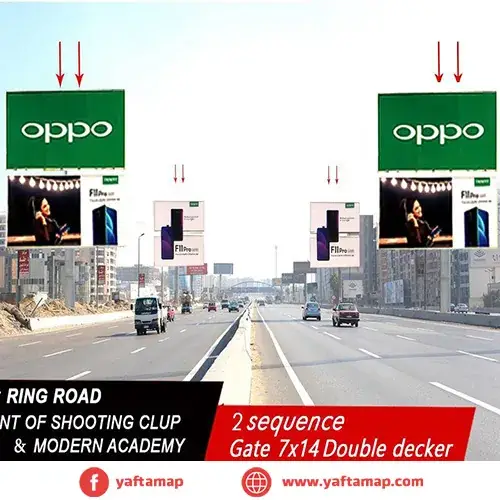
A digital billboard is an LED screen that can display several advertisements according to a scheduled rotation. The content can usually be changed electronically after the operator approves the files.

Its real advantage is flexibility. A retailer can promote different offers, an event organizer can change the message as the date approaches, and a real estate developer can move from awareness to appointment booking without replacing printed material.
Digital is usually a good fit when:
- The campaign has several creative versions.
- Offers, dates, or messages may change.
- The advertiser needs different messages by time of day.
- The campaign is short, seasonal, or event-based.
- The brand needs to update creative quickly.
Static vs Digital Billboard Comparison
| Decision factor | Static billboard | Digital billboard |
|---|---|---|
| Message | One fixed message. | Several messages or creative versions. |
| Visibility | The face remains visible continuously. | The advertisement appears within a scheduled loop. |
| Flexibility | Lower after printing and installation. | Higher when updates and scheduling are needed. |
| Campaign duration | Often suitable for longer campaigns. | Useful for short, seasonal, or changing campaigns. |
| Creative options | Strong image and short message. | Can support sequences, motion, and time-based messages. |
| Exposure ownership | Often full ownership of the face. | Usually shared through a digital rotation. |
| Best decision logic | Choose it when permanence and repetition matter. | Choose it when flexibility and message variation matter. |
Need a wider comparison?
Read our
Billboard vs DOOH in Egypt
guide before choosing the format for your campaign.
Do Not Confuse Vehicle Volume with Real Audience
Many billboard proposals begin with a large traffic number. That number can be useful, but it does not answer every question an advertiser needs to make a confident decision.
Vehicles can show that traffic passes a location. They cannot automatically tell you how many different people were near the board, how often the same people returned, where they live, or what types of places they visit around it.
What useful audience measurement should show
Different people counted separately from repeated vehicle passes.
Whether the audience lives or spends time near the location.
Whether the same audience returns on multiple days.
How long people remain near the location.
The services, venues, and places the audience visits nearby.
The more useful planning question is not “How many cars pass?” but “Who is near the board, how often do they return, and is that audience relevant to the activity?”
A Real Planning Example: Corniche Sidi Gaber
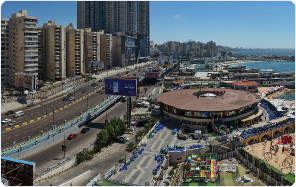
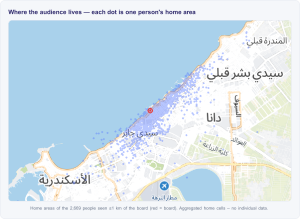
Consider the Corniche Sidi Gaber large-format board in Alexandria. The board is identified as EG-ALX-003, a 7 × 14 metre static large-format board with two sides.
The useful question is not whether the site looks impressive from the road. It is whether the people around it, their movement, and their habits match the advertiser’s objective.
What the measured report showed
The report used anonymised location data around the exact site. People figures were measured, while vehicle figures were treated as modeled planning ranges. That distinction matters because traffic volume and unique-person reach are not the same thing.
Unique people within 2 km
Audience local within 5 km
Average days seen per person
Multi-day repeat in the extended window
Measured average dwell
The report also showed the types of places where this audience spent time: dining and cafés, banking and services, health and medical, and shopping and retail were all represented in the surrounding activity mix.
These figures create a useful planning conversation. A strong local audience may support a restaurant, clinic, bank, or nearby retailer. Repeat exposure may help a real estate or brand-awareness campaign. A measured dwell time of about fourteen seconds suggests that the creative should be short, readable, and direct.
This is the difference between booking a billboard and planning a campaign. The location may be valuable, but its value depends on the match between the audience, activity, message, duration, and desired action.
How Audience Data Changes the Buying Decision
| What the data shows | What it may mean | Planning response |
|---|---|---|
| High local audience share | The location may influence nearby residents and regular visitors. | Use local offers, branch directions, clinics, restaurants, banks, and nearby services. |
| Repeated exposure across days | The same audience may see the message more than once. | Use consistent brand language and a memorable message. |
| Short dwell time | The audience has limited time to process the creative. | Use fewer words, larger type, stronger contrast, and one clear CTA. |
| Strong dining and café activity | The surrounding audience may be receptive to food and lifestyle offers. | Test restaurants, delivery apps, cafés, and nearby entertainment. |
| Vehicle volume only | Traffic opportunity exists, but audience identity is less clear. | Request a wider location assessment before committing the full budget. |
How Should You Compare Cost?
Neither format is always cheaper. Static billboard cost is influenced by the location, size, duration, production, installation, visibility, and demand. Digital cost is influenced by the screen, campaign duration, loop structure, share of voice, exposure schedule, number of screens, and creative requirements.
The more useful question is not “Which format has the lower rate?” It is “Which format gives this activity the best chance of achieving its objective with the available budget?”
Before booking, ask for:
production and installation details, screen operating hours, loop length, spot duration, share of voice, reporting, proof of play, creative adaptation requirements, and the methodology behind the audience or traffic figures.
For a deeper cost breakdown, read
How Much Does DOOH Advertising Cost in Egypt?
and
Billboard Prices in Egypt 2026
.
How to Choose a Billboard Location in Egypt
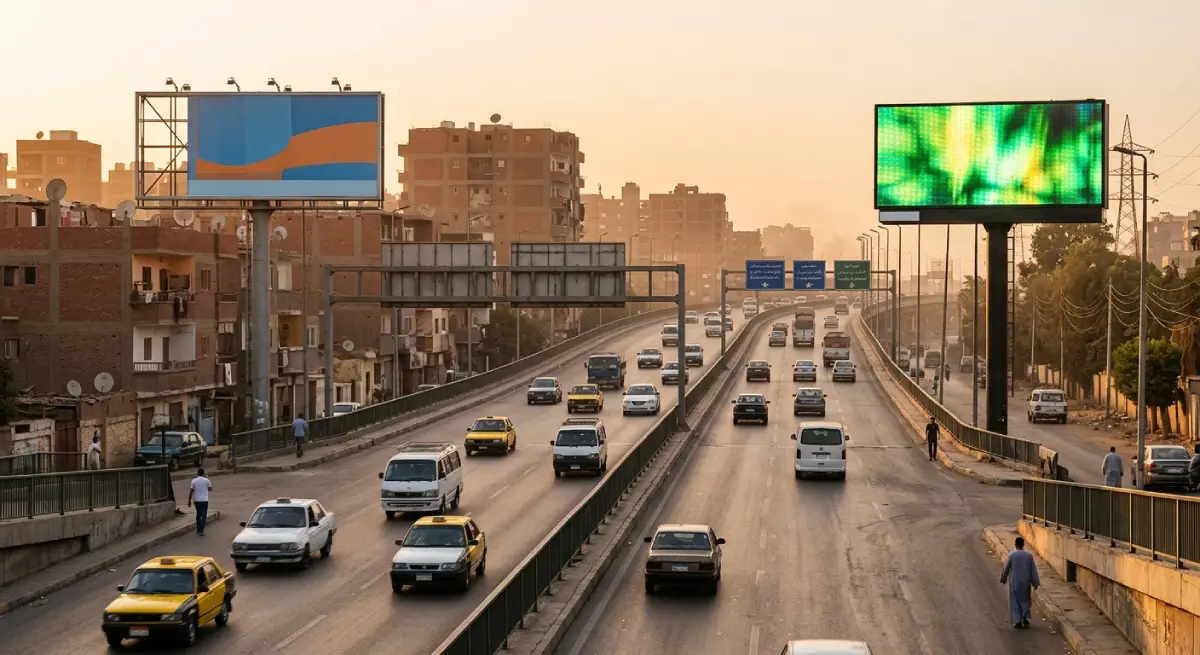
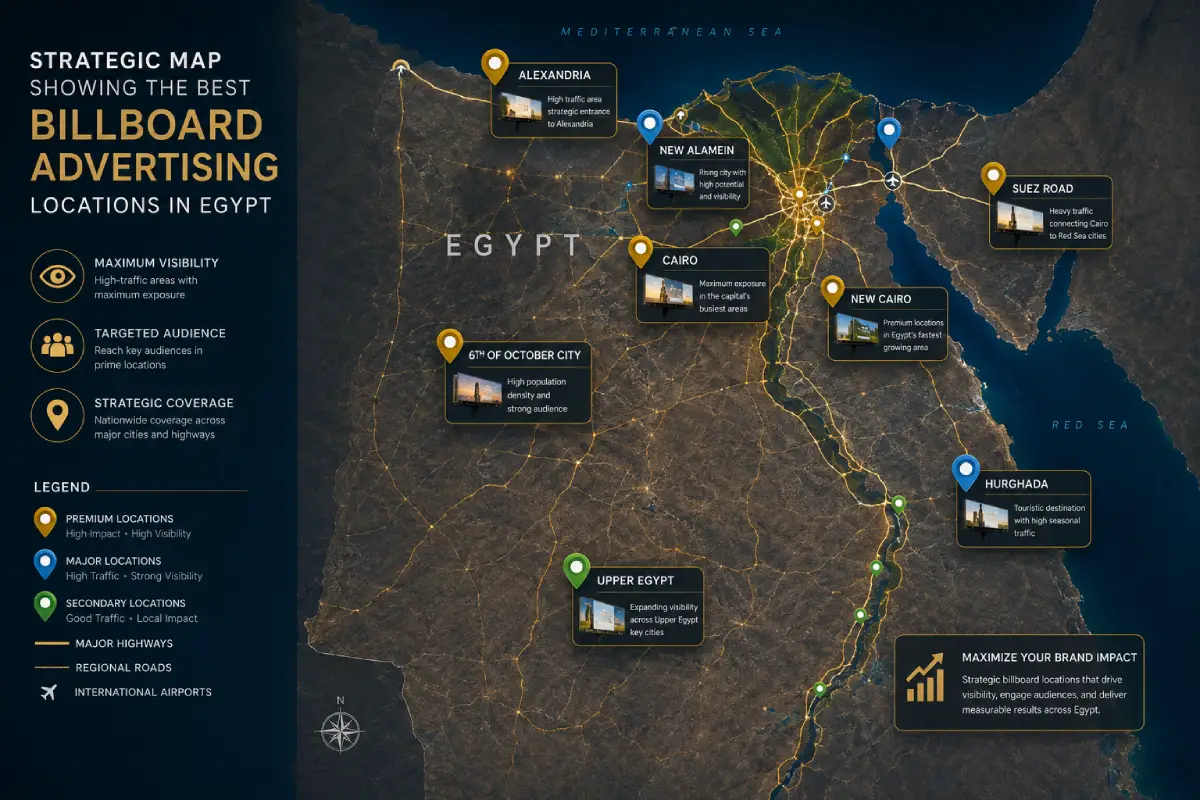
A location should be judged by more than its size or traffic headline. Look at who moves through the area, where they live, where they spend time, how long they stay near the site, and what action the advertisement is asking them to take.
May suit real estate, banking, telecom, automotive, corporate, retail, and premium consumer campaigns.
May support local services, dining, healthcare, retail, banking, lifestyle, and coastal audience campaigns.
May be relevant for hotels, airlines, tourism, luxury, hospitality, international services, and travel experiences.
For a practical location framework, read
How to Choose the Best Billboard Location in Egypt?
.
How Yafta Map Helps Plan the Right Campaign
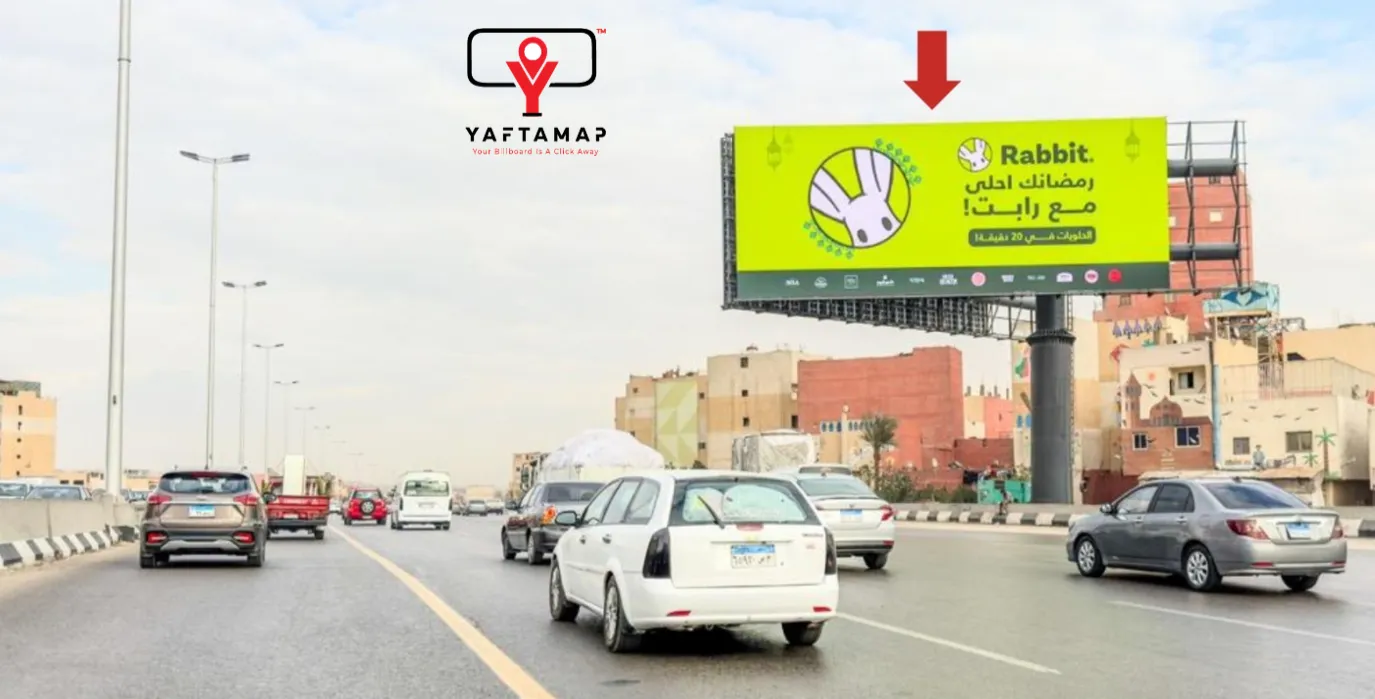
You do not need to interpret every audience chart alone. Yafta Map can translate location and audience information into a campaign decision: which areas to include, which format to use, how long to run, what the creative should say, and how to measure the result.
Activity, audience, offer, objective, locations, duration, and available budget.
Review movement, local relevance, traffic, dwell, repetition, and audience context.
Recommend static, digital, mall, airport, or a combination based on the objective.
Avoid paying for locations that do not match the activity or desired action.
Set the recommended locations, timing, creative direction, KPIs, and next steps.
If you are not sure whether your campaign needs a static board, a digital screen, a mall placement, an airport location, or a mix of formats, Yafta Map can prepare a plan around your actual business objective.
The initial campaign direction can be prepared within 48 hours, helping you use the budget deliberately instead of placing an advertisement on whatever inventory happens to be available.
For a complete digital campaign framework, see
DOOH Campaign Planning in Egypt
and
OOH Media Planning & Buying in Egypt
.
Frequently Asked Questions
Is a digital billboard always better than a static billboard?
No. A static billboard may be better for a stable message and long-term local visibility. A digital billboard may be better for changing offers, multiple creatives, short campaigns, and time-based messaging.
What should I choose for a real estate campaign?
The choice depends on the project location, buyer journey, campaign phase, and message. Static can support repeated awareness, while digital can support launches, viewing appointments, changing payment messages, and limited offers.
What billboard format works best for restaurants?
Restaurants usually need locations close to the branch or the route leading to it. Digital can help with lunch, dinner, weekend, and promotional messages, while static can support a stable local presence.
Why are unique people more useful than vehicle volume?
Unique-person data can help estimate how many different people were near the location and how often they returned. Vehicle volume shows traffic opportunity but does not automatically identify unique people or repeat exposure.
How much does billboard advertising cost in Egypt?
Pricing depends on the location, size, duration, demand, production, installation, digital rotation, share of voice, and reporting requirements. The most useful comparison is total campaign value, not media price alone.
Can Yafta Map help choose the right billboard?
Yes. Yafta Map can connect your activity, audience, campaign objective, locations, format, creative direction, budget, and measurement approach into a practical outdoor media plan.
How quickly can Yafta Map prepare a campaign direction?
The initial campaign direction can be prepared within 48 hours after receiving the necessary business details, campaign objective, preferred locations, timing, and budget information.
Choose the Campaign Before You Choose the Billboard
Static and digital billboards are not competing answers to the same question. They are different tools for different business situations.
Start with your activity, audience, location, objective, campaign duration, message, and budget. Then decide whether static, digital, or a combination of both formats can deliver the stronger business outcome.
Yafta Map’s experts can turn these questions into a practical campaign plan within 48 hours, with suitable locations, formats, timing, creative direction, and measurable next steps.
Final Takeaway
Static billboards are often the better fit for continuous visibility, one fixed message, and long-term local presence. Digital billboards are often the better fit for flexible scheduling, multiple creatives, changing offers, and short or time-sensitive campaigns.
The format should come after the strategy. Start with the activity, audience, location, objective, message, and measurement plan. That is how you avoid spending the budget on a billboard that looks impressive but does not help the business move forward.