DOOH Advertising in Egypt: A Complete Guide to Planning, Buying and Measuring Digital Out-of-Home Campaigns
Choosing a digital screen is only one part of a DOOH campaign. The real challenge is deciding where, when, and why your audience should see the message—and how you will know whether the campaign worked.
This guide explains how to plan, buy, execute, and measure a DOOH campaign in Egypt from the first brief to the final report.
What is DOOH advertising?
DOOH stands for Digital Out-of-Home advertising. It refers to digital media used for marketing purposes outside the home, including roadside LED screens, mall displays, airport screens, retail media, and urban digital billboards.
Unlike a static billboard, a DOOH screen can support multiple creative versions, scheduled messages, content rotations, and campaign updates. Programmatic buying may be available for some inventory, but it is a buying capability rather than a requirement for something to be considered DOOH.
A successful campaign connects the objective, audience, location, screen, creative, budget, schedule, and measurement approach. This is what turns a digital screen into a real media opportunity.
The key idea: DOOH planning should start with the campaign objective—not with the screen you happen to find available.
Start with the campaign objective
Before asking which screen to book, define what the campaign needs to achieve. Different objectives require different locations, schedules, creative messages, and KPIs.
A lead-generation campaign may use a landing page, QR code, phone number, or WhatsApp CTA. An event campaign may require heavier exposure during the final days before the event.
Understand the audience and its movement in Egypt
A strong campaign does not target “everyone in Cairo” or “everyone in Alexandria.” It starts by understanding where the target audience lives, works, shops, travels, and spends time.
A campaign may need to distinguish between New Cairo, Nasr City, Maadi, Sheikh Zayed, 6th of October, Alexandria, and Sidi Gaber, depending on where the target audience lives, works, shops, and travels. Major malls, airport routes, business districts, and commuter corridors may also require different media strategies.
For example, a real estate campaign targeting buyers interested in New Cairo may prioritize commuter routes connecting residential communities with business districts. A healthcare campaign may focus on areas close to hospitals and clinics, while a restaurant may need screens near the branch during lunch and evening periods.
Choose the right screen and location
The largest or most expensive screen is not automatically the best screen. Evaluate each opportunity according to audience relevance, traffic quality, viewing angle, viewing distance, road speed, dwell time, lighting, nearby commercial activity, and distance from the desired action.
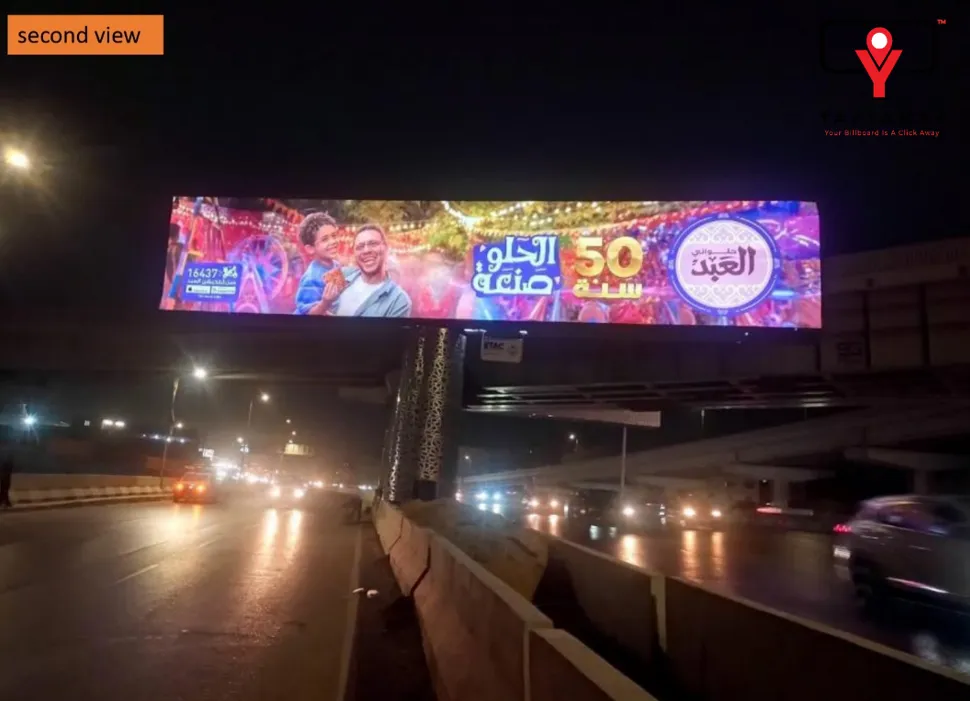
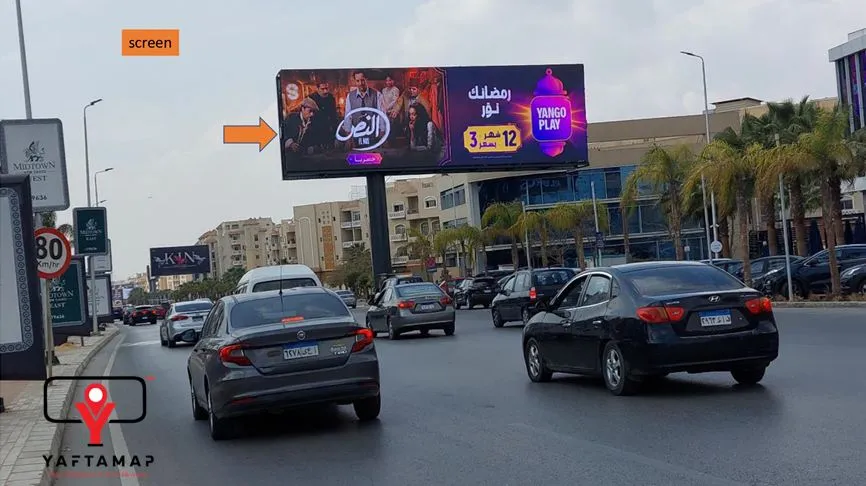
Roadside and highway DOOH
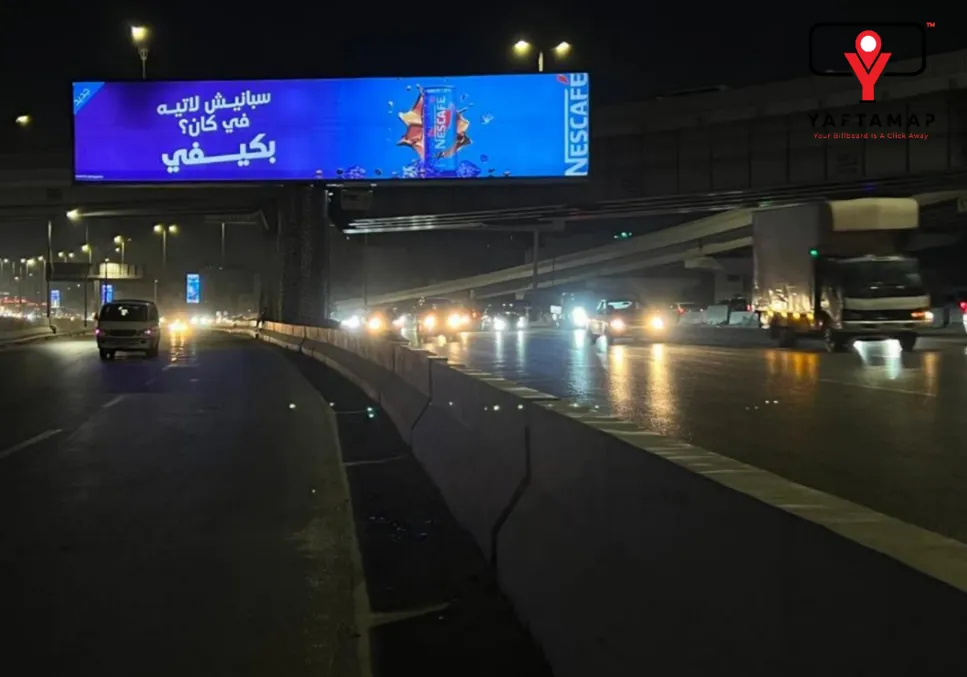
Useful for awareness, automotive, real estate, telecom, banking, and large product launches. The message must be short and easy to understand while people are moving.
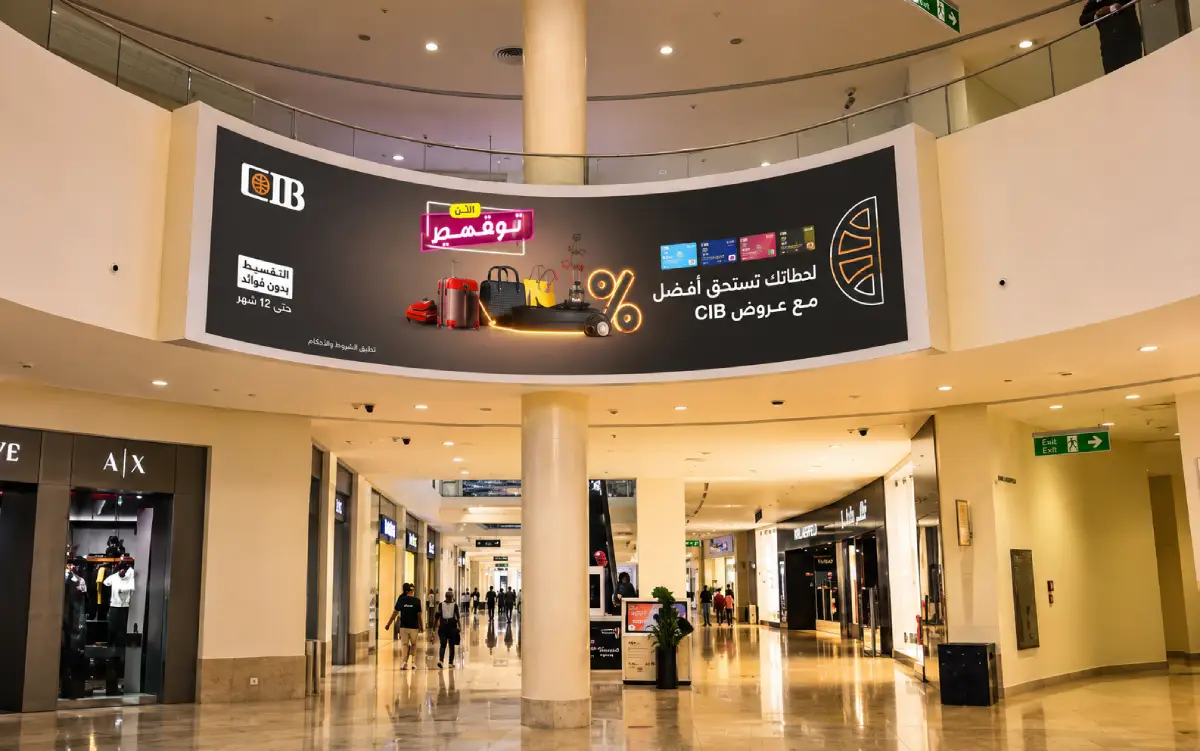
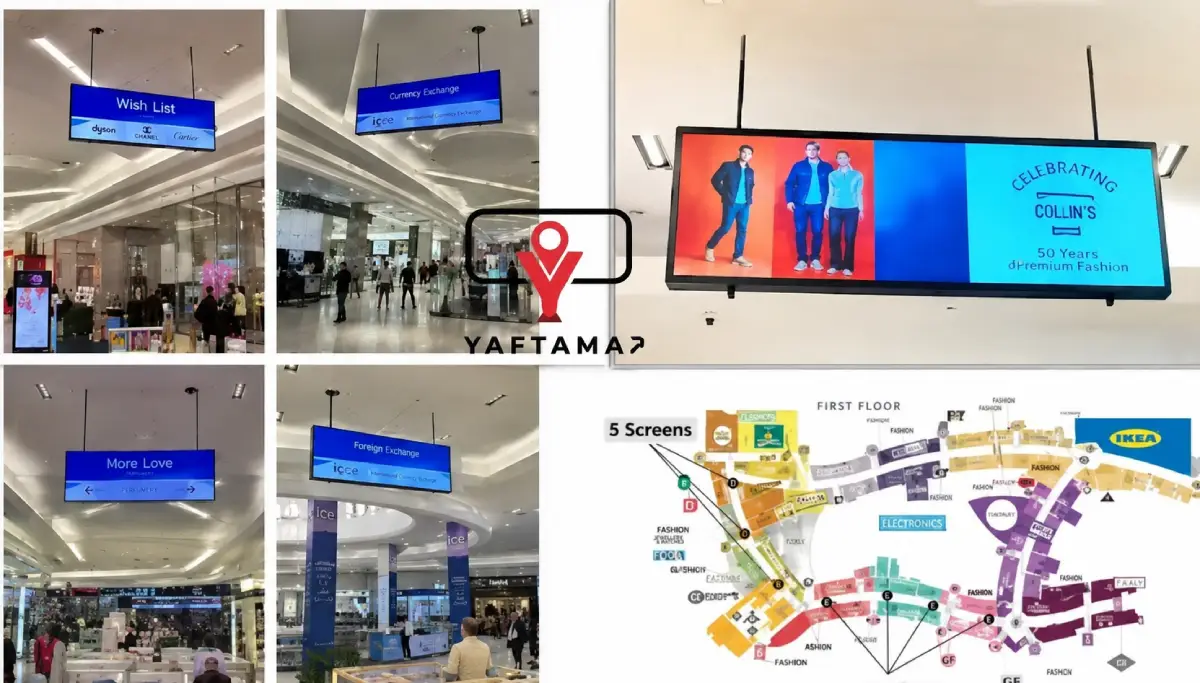
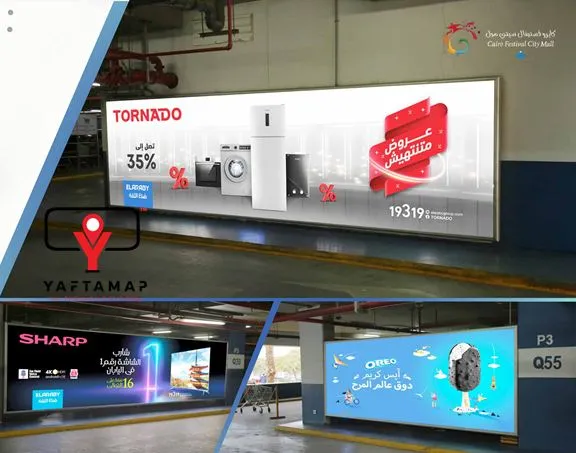
Mall and retail DOOH
Useful for fashion, beauty, food, electronics, retail offers, and new store openings where the audience is already close to a purchase decision.
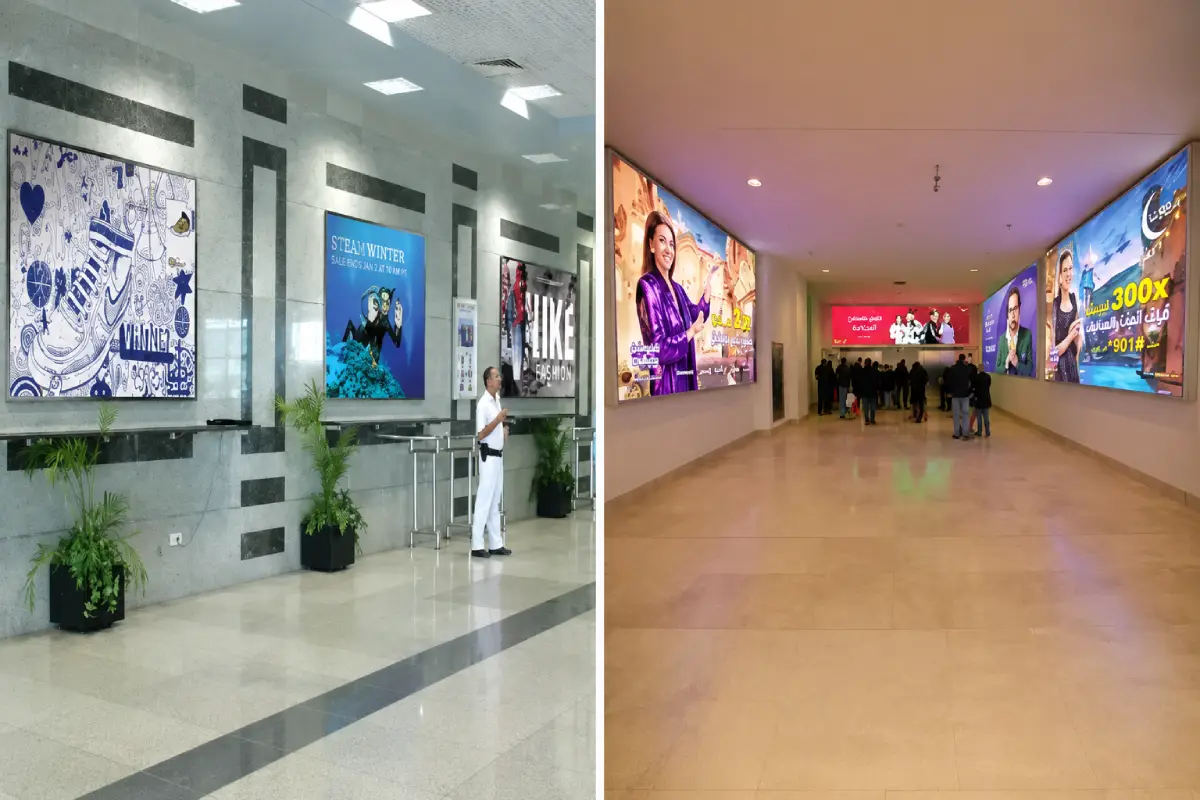
Airport and commercial screens
Airport screens may be relevant for financial services, tourism, hospitality, luxury, international, and business-focused campaigns.
The best location is the one that matches the objective and audience behavior—not simply the one with the largest display.
Build the DOOH media plan
A professional media plan should show the screen name, location, format, size, number of screens, campaign dates, operating period, creative duration, loop, Share of Voice, expected delivery, media cost, production cost, and reporting requirements.
One screen or a network?
One screen may suit a local test, one branch, a limited offer, or a focused area. A network may be more appropriate for product launches, large awareness campaigns, and reaching different audience zones.
Media cost versus total campaign cost
Media cost is only one part of the total campaign cost. The total budget may also include creative production, adaptation, media planning, monitoring, proof of play, reporting, measurement, and contingency where appropriate.
The cheapest screen is not necessarily the most efficient option. Compare audience value, location quality, exposure, and campaign role rather than comparing media cost alone.
Flighting and campaign scheduling
Flighting refers to how the campaign is distributed over time. A DOOH campaign does not always need to run at the same intensity every day.
DOOH vs. Static OOH
DOOH and static billboards can both build awareness, but they solve different problems.
| DOOH is useful when you need | Static OOH is useful when you need |
|---|---|
| Multiple creative versions | One constant message |
| Time-of-day messaging | Long-term visibility |
| Frequent creative updates | Permanent presence |
| Short-term promotions | Landmark positioning |
| Dynamic scheduling | Simpler creative strategy |
| Programmatic buying where available | Stable physical presence |
Programmatic DOOH explained
Not every DOOH campaign in Egypt is programmatic.
Direct DOOH booking means selecting specific screens and working directly with the screen owner or media provider.
Programmatic DOOH uses automated technology and a buying platform to purchase eligible digital outdoor inventory according to audience, location, time, context, campaign conditions, and available inventory.
Programmatic buying does not necessarily mean that every aspect of the campaign is automated. Available targeting, inventory, bidding, scheduling, and measurement capabilities depend on the technology, market, screen network, and available inventory.
Create the right DOOH creative
DOOH creative should be designed for the environment in which it will appear. A social media design may contain several lines of text and multiple visual elements, but that approach usually does not work on a moving digital screen.
Weak DOOH Example
Discover our new collection with amazing products and special prices available now at all our branches.
Better DOOH Example
NEW COLLECTION
UP TO 30% OFF
VISIT US TODAY
Before submission, confirm the screen dimensions, aspect ratio, file format, resolution, video duration, file size, animation specifications, brightness requirements, and delivery deadline.
Execute the campaign professionally
A professional DOOH campaign should move through defined stages:
- Campaign brief: objective, audience, locations, dates, budget, and message.
- Media proposal: recommended screens, location rationale, duration, delivery, and cost.
- Approval: final locations, budget, creative, schedule, and commercial terms.
- Creative preparation: adaptation and technical review.
- Booking and scheduling: inventory reservation, dates, upload, and schedule.
- Launch and monitoring: check the approved creative on the correct screens.
- Reporting: delivery information, proof of play, estimates, issues, and recommendations.
Measure the right things
Not every DOOH metric is directly measured. Measurement methodologies vary by provider, market, inventory type, and data availability. Before launch, advertisers should confirm how each KPI is defined, calculated, and reported.
| Measurement level | Examples | What it tells you |
|---|---|---|
| Delivery | Proof of Play, delivered plays, screen uptime | Whether delivery was scheduled or reported |
| Exposure | Impressions, reach, frequency, Share of Voice | Potential audience exposure |
| Engagement | QR scans, landing-page visits, calls, WhatsApp inquiries | Direct response to the campaign |
| Business outcome | Store visits, leads, sales lift, brand lift | Commercial or brand impact |
Proof of Play is evidence used to verify that an advertisement was scheduled and/or played on the selected screen during the agreed campaign period. The level of verification can vary by media provider and may range from system play logs to additional display or third-party verification.
Do not treat modeled vehicle volume as unique human reach. Vehicles can support media planning, but they cannot automatically identify how many individual people saw the advertisement.
DOOH Campaign Launch Checklist
Frequently Asked Questions
What is DOOH advertising? DOOH means Digital Out-of-Home advertising. It is advertising displayed on digital screens outside the home, including roadside, mall, airport, retail, and urban screens.
How much does DOOH advertising cost in Egypt? DOOH advertising cost in Egypt varies significantly depending on the screen, location, campaign duration, Share of Voice, time of day, and whether production, media planning, monitoring, or reporting are included.
How do I choose the right DOOH screen? Start with the audience and campaign objective. Then compare locations according to traffic quality, visibility, viewing conditions, audience relevance, and proximity to the desired action.
What is the difference between DOOH and traditional OOH? Traditional OOH is usually static and fixed, while DOOH uses digital screens that can support changing creatives, scheduling, rotation, and more flexible campaign management.
What is Share of Voice in DOOH? Share of Voice refers to the proportion of the screen loop or available advertising time allocated to a campaign.
Can DOOH campaigns be programmatic in Egypt? Some inventory may be available programmatically, but not every DOOH screen or network uses programmatic buying. Availability depends on the screen operator, platform, market, and available inventory.
Need Help Planning a DOOH Campaign in Egypt?
Tell us your objective, target audience, preferred locations, campaign period, and budget, and we can help you identify the right DOOH opportunities for your campaign.
Final takeaway
A professional DOOH campaign is not simply a booking on a digital screen. It is a coordinated plan that connects the right objective with the right audience, location, creative, schedule, budget, and measurement method.
Start with the objective. Map how the audience moves in Egypt. Select locations that support the objective. Build creative for the viewing environment. Confirm delivery and measurement before launch.