The Evolution of Outdoor Advertising:
From Ancient Prestige to Modern Billboards
How billboards became symbols of power, awareness, and commercial presence.
Believe it or not, a billboard is more than an advertisement. Throughout history, it has represented prestige, authority, visibility, and the ability to claim attention in a crowded public space.
It may seem that billboards became powerful through the promotional work of figures such as P. T. Barnum, but the use of public visual communication dates back much further. Ancient Egyptians used monumental inscriptions, symbols, and hieroglyphics to communicate authority and demonstrate the control of their rulers.
They may not have created the modern billboard as we know it today, but they understood an important principle: public messages placed in visible locations can communicate power, control, and prestige.
That same principle continues in modern advertising. When a major brand places its message on a prominent billboard, it is not only promoting a product—it is also communicating presence: “We are here.”
Advertising is awareness—and awareness is existence.
A brand that is repeatedly seen becomes familiar. A familiar brand is more likely to be remembered when the customer is ready to make a decision.
From Ancient Messages to Mass Printing
The historical path that transformed public visual communication from an ancient symbol of authority into a modern commercial tool includes several important milestones.
Around 1440, Johannes Gutenberg introduced movable-type printing in Europe. This innovation made the large-scale production of flyers, handbills, posters, and other printed materials possible.
Printing changed communication because one design could be reproduced many times and distributed to a much wider audience. Businesses no longer had to rely entirely on individually created signs or manually copied messages.
The Rise of Lithography
In the late eighteenth century, Alois Senefelder developed lithography, a printing method that made it easier to reproduce detailed images and colourful designs.
Lithography was important to advertising because it reduced the time and effort required to reproduce visual material. Instead of creating every copy manually, advertisers could produce multiple versions of the same design and distribute them across different locations.
Colour also increased the visual impact of posters and public messages. A single design could be reproduced, printed, and displayed in many places—an early version of the scalable distribution that digital platforms provide today.
In a way, lithography allowed advertisers to “copy once and distribute everywhere”—a concept that feels surprisingly similar to publishing content online today.
From Printed Posters to Modern Advertising
Modern technology has made distribution even easier. Publishing on social media can be free, and creating a website is more accessible than ever. However, major brands still invest in prominent billboards on highways, major roads, and high-traffic urban routes.
The reason is simple: a large billboard does more than deliver information. It creates physical presence, reinforces brand scale, and places the company in front of a broad audience repeatedly.
The First American Billboards
The United States played an important role in the development of modern billboard advertising. Jared Bell is widely associated with the early large-scale use of colourful posters to promote circus performances during the 1830s.
These posters used strong colours, large designs, and memorable visual elements to attract the attention of people passing through public spaces.
Other businesses soon recognized the potential of this advertising medium. Large posters became an effective way to promote performances, products, services, and special offers.
Why Billboard Regulations Became Necessary
As outdoor advertising became more popular, public spaces became increasingly crowded with commercial messages. Businesses wanted their products and services to be visible everywhere, but uncontrolled advertising created problems involving property rights, public appearance, and access to advertising space.
Rules and regulations became necessary. Businesses generally needed to own or lease the land, structure, or advertising surface where their messages were displayed.
By the nineteenth century, advertisers were increasingly able to legally purchase or lease outdoor advertising space. This helped create a more organized industry and encouraged advertisers to experiment with larger, more creative billboard designs.
Historical records commonly identify 1867 as one of the early years in which billboard space was formally leased, marking an important step toward the modern outdoor advertising business.
Billboards Become a Voice for the Public
For much of their history, billboards were associated with large businesses, powerful institutions, and wealthy advertisers. However, by the nineteenth and twentieth centuries, outdoor advertising also became a way to communicate public-interest messages.
Community organizations, educational committees, charities, and public institutions used outdoor spaces to promote public services, social initiatives, and community information.
This role continues today. Public-service campaigns, health announcements, safety messages, and community information are regularly displayed on billboards in cities around the world.
Billboards During Public Health Campaigns
The COVID-19 pandemic demonstrated that billboards are not only commercial tools. Governments and public-health organizations used outdoor advertising to communicate health guidance, safety information, and public-service messages to large audiences in streets and public spaces.
Billboards in the Modern City
Today, many cities are covered with outdoor advertising. The growth of transportation has made visibility along roads, highways, bridges, public transport routes, shopping areas, and city centres increasingly valuable.
Billboards are now found wherever people move: on major roads, near retail destinations, around transport hubs, beside airports, and in busy commercial districts.
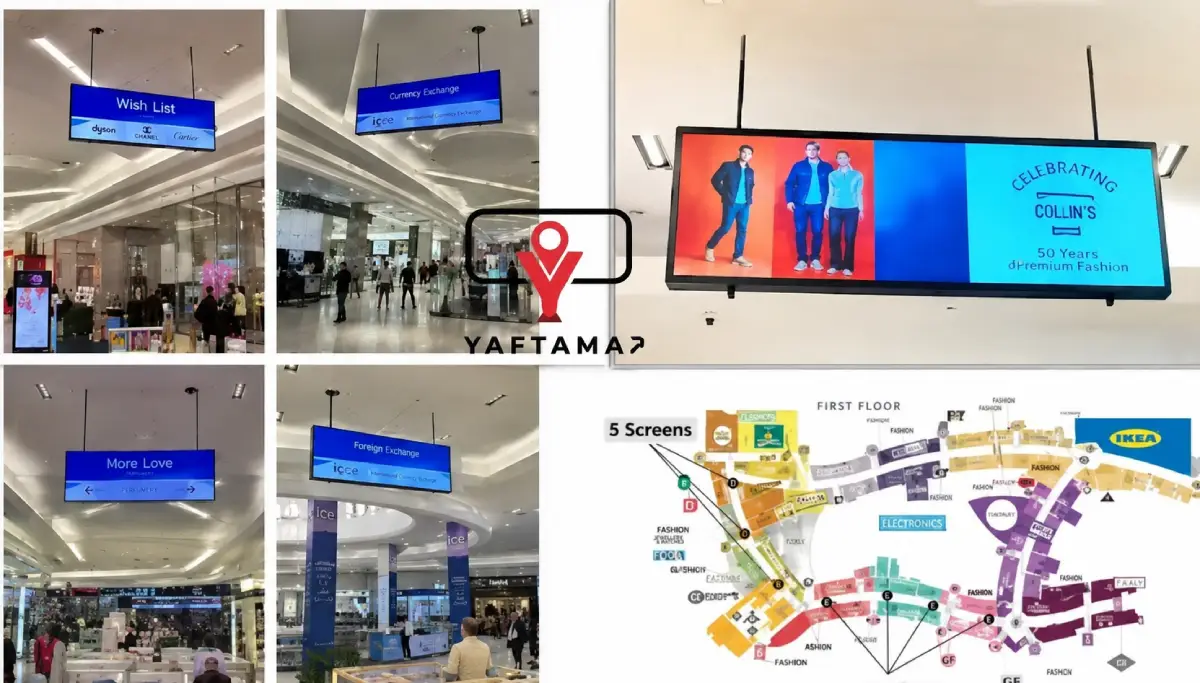
The industry has also evolved through digital screens, creative installations, interactive formats, programmatic buying, and more data-driven planning. These developments have expanded the ways brands can capture attention and build awareness in public spaces.
Today, outdoor advertising is not limited to a printed board. It can include static billboards, digital screens, transit media, retail advertising, airport media, street furniture, and other public-space formats.
The Power of Outdoor Advertising
The evolution of outdoor advertising shows that its central purpose has remained consistent: making a message visible to people in the real world.
A billboard can announce that a product exists, reinforce a company’s scale, support a public campaign, or create familiarity through repeated exposure.
From ancient Egyptian inscriptions to modern digital displays, outdoor advertising has continued to evolve while preserving its most important strength: public visibility.
Visibility creates presence
Billboards have moved from monumental public messages to printed posters, from printed posters to large commercial displays, and from static structures to digital screens. Yet their purpose remains the same: to make brands, products, services, and ideas visible.